Second Trimester Checklist: What to Do After the First 12 Weeks (13–27 Weeks)
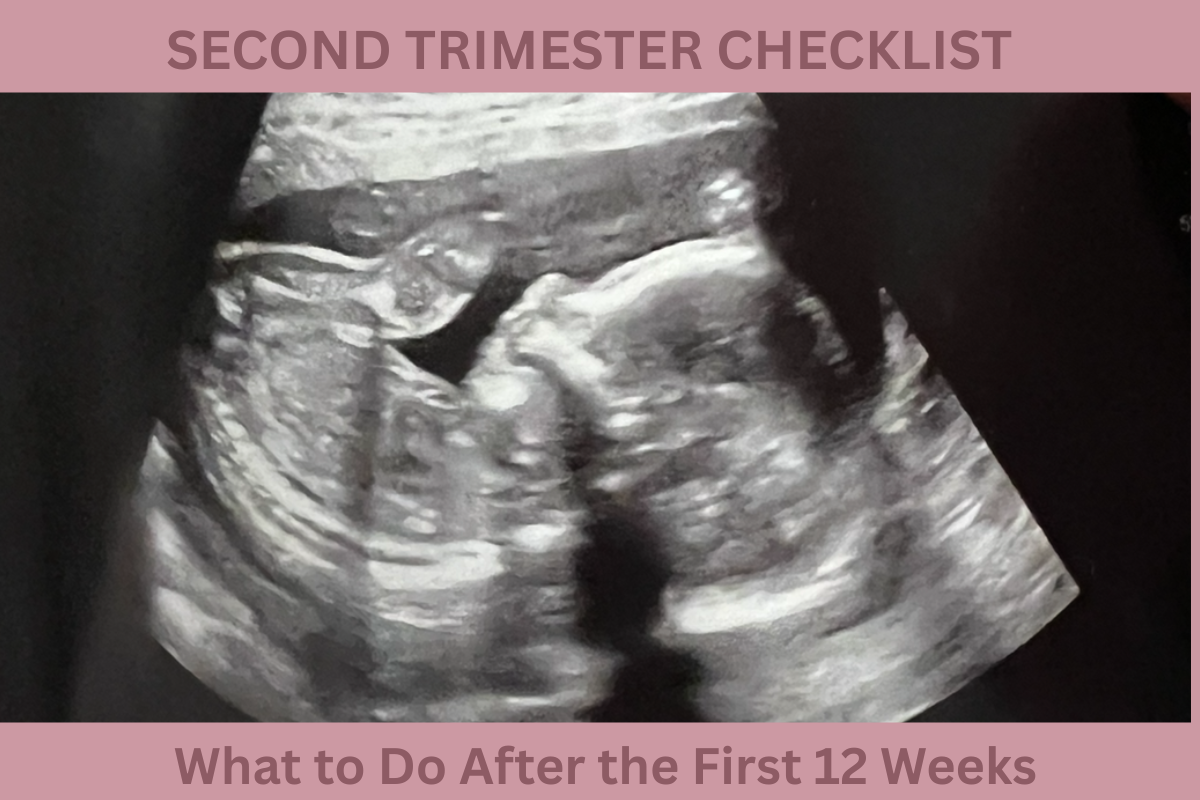
a picture of my second baby at 22 weeks
You did it! You survived the first trimester! Now, in the second trimester, many moms start feeling more like themselves again. The nausea may ease up, you may start feeling your energy return, and your pregnancy starts feeling real.
However, I do want to add that you may not feel totally better the minute you enter the second trimester. It may slowly start easing off, and your energy may come back gradually. I know in my pregnancy I dealt with nausea until I was closer to 20 weeks.
This is also when a lot of questions come up like:
When do I feel baby move? What tests are next? When should I start preparing for birth?
If you’re in your second trimester and wondering what you should be doing right now and what to focus on, this checklist will help guide you.
Keep Up With Prenatal Care & Key Appointments
The first thing I recommend is to nail down your choice of provider. Whether it’s an OB or midwife, make sure they are aligned with you. Interview your choices of physicians and midwives and assess their answers.
You can get my guide on Conversations with Your Care Provider for free here! This will walk you through questions to ask, how to assess their answers, identify red flags, switch providers later in pregnancy, and navigate insurance.
It is crucial to be with a provider that respects you, aligns with your beliefs, and makes you feel safe and heard. Don’t settle just because that’s who’s assigned to you in the practice you’ve always gone to.
Attend your regular prenatal visits to be screened for high-risk complications (this can affect your ability to have a home birth or birth center birth).
Right in line with that, learn about the recommended second trimester tests and decide if you want to have them done or not. You have a right to decline any test, and you can also ask for alternatives to some.
One of the major tests during your second trimester is your anatomy scan.
Asking your care team what to expect at the anatomy scan is a great idea, and they will likely tell you the basics. But let me tell you my experience.
They told me to drink 32 oz of water before my appointment because a full bladder can help them clearly see baby. I took this so literally—I drank 32 oz plus more before arriving. Then when I got there, I kid you not, it took an hour and a half before they called me back… my bladder was so full it wasn’t even funny. I had to pee so bad and was so uncomfortable during the ultrasound.
So what I would recommend is to drink half before going and sip while you’re in the waiting room.
During the ultrasound, they did the external scan and got all the measurements of baby’s limbs, organs, and head. Then they had me go to the bathroom, come back, and did a vaginal ultrasound to check a few other things. (They only did the vaginal ultrasound with my second during the anatomy scan—I don’t recall them doing that with my first.)
It’s a long time of laying there while they get all of baby measured, and if they can’t get everything because of baby’s positioning, you may have to come back another day.
During these weeks, focus on doing your research, asking questions, and advocating for yourself. Remember, this is your body, your baby, and your experience. No one cares more about those things than you and your partner.
Checklist:
✔ Attend regular prenatal appointments
✔ Schedule and prepare for anatomy scan
✔ Learn about any recommended second trimester tests
✔ Continue asking questions and advocating for yourself
Start Feeling Baby & Tracking Movement
One of the most amazing parts of being in the second trimester is when you start feeling your baby move.
When this starts is different for all moms and depends on a few things—whether you’re a first-time mom and where your placenta is located. For moms who have already had babies, you may feel movement earlier. With my second, I started feeling him move around 14 weeks!
For first-time moms, it’s typical to start feeling movement anywhere from 18–22 weeks. If you have an anterior placenta (meaning it’s attached in the front of your uterus), you may not feel kicks until later in pregnancy. This is because the placenta cushions their movements.
The first kicks may go unnoticed, or you may not realize that’s what they are. Many people say it feels like butterfly flutters or even gas. It can be hard to know for sure.
Rest assured, your baby is moving even if you can’t feel it. Even if you don’t start feeling movement until later, this isn’t necessarily a reason to worry. Talk with your provider if you are concerned, but know it’s different for everyone.
Don’t forget to trust in the Lord during this time.
From 16–24 weeks, your baby is developing their hearing, so talk to your baby! They may respond to your voice, and it’s such a beautiful way to bond with the life growing inside of you.
Checklist:
✔ Learn what baby movement may feel like
✔ Begin noticing patterns (no pressure yet)
✔ Enjoy bonding moments
Begin Birth Education & Planning
This trimester is a great time to start learning about birth, coming up with a plan, and understanding your preferences.
This is also a great time to hire a doula if you haven’t already. They can help direct you to resources, put together your birth plan, and educate you on your options. Interview a few different doulas—they may offer childbirth education courses or bundle them with their birth doula packages.
I have a 1:1 childbirth education series that I go through with my clients, bundled with my doula package. You can check that out here!
Also, keep an eye out later this year for my video birth course to help you prepare on your own time!
Checklist:
✔ Choose a childbirth education class
✔ Begin thinking about your birth preferences
✔ Continue or begin working with a doula
✔ Start discussing birth with your partner
Start Preparing for Baby
As you enter your second trimester, you may start thinking about what you really need for a baby and decorating your nursery.
Now is a great time to start a baby registry. I used Babylist with my pregnancies because it connects to many different stores, so everything is in one place rather than having separate registries. I also liked having an Amazon registry.
One of the coolest things with Babylist is that you can add a meal fund, doula fund, or even a midwife fund. You can include a note for friends and family explaining how helpful these things will be for your birth and recovery.
Spend some time researching essential baby items. You’d be surprised how little you actually need—but having things that make your life easier is always helpful.
You can avoid overbuying by doing your research and asking other parents what they actually used versus what they could have done without.
Also, if it feels right for you, look into kids’ consignment sales! There are some great items and baby clothes. Babies grow so fast, so secondhand items are often still in great condition and can save you money.
Checklist:
✔ Start your baby registry
✔ Research essential baby items
✔ Begin planning your nursery (no rush)
Support Your Changing Body
Your body is changing so much as it grows to accommodate your baby.
You may experience things like back pain as there’s more pressure on your body. As your body grows quickly, your skin stretches and changes fast. This can lead to stretch marks, which many moms want to avoid. Keeping your skin hydrated by drinking plenty of water, using moisturizer, and taking a good-quality collagen may help with skin elasticity.
I got a lot of stretch marks with my first pregnancy, and with my second, I took collagen daily and only got a few at the very end.
Your hormones are also changing drastically, which can lead to skin changes. Your body is also producing relaxin, a hormone that loosens your ligaments and muscles, which can contribute to discomfort.
I recommend implementing a stretching or workout routine as your body starts to feel better. I loved following Nourish Move Love’s second trimester workout plan and videos from Pregnancy and Postpartum TV.
Focus on nourishing your body with whole foods during this time. Lily Nichols has an amazing book called Real Food for Pregnancy.
This is also a great time to start seeing a chiropractor regularly—they can help keep your body aligned and support your nervous system.
Checklist:
✔ Stay active in a way that feels good
✔ Support your body with proper nutrition
✔ Address common discomforts (back pain, round ligament pain, etc.)
✔ Stay hydrated
Continue Preparing for Postpartum
We touched on postpartum in the first trimester checklist, but now you can start planning more intentionally about it.
You can research what items might be helpful and begin slowly gathering essentials. Think about meals you want to have on hand—many moms prepare freezer meals or simple options that others can easily make.
Start having conversations with your partner about their role during the immediate postpartum period.
It can also be incredibly helpful to hire a postpartum doula. Even just a couple of days a week for a few weeks can make a huge difference in your transition.
Checklist:
✔ Start thinking more intentionally about postpartum support
✔ Consider meals, help, and recovery
✔ Begin gathering postpartum essentials
Start Building Your Support System
Including your partner in this process is such a beautiful bonding experience.
It’s often said that the first year of a baby’s life can be one of the hardest on a marriage, so focus on your relationship and communication now. Do pregnancy education and planning together.
It’s also important to think about your birth team. Who is your provider? Are you comfortable with students in the room? Are you hiring a doula? Will a family member or friend be present?
Then think about your support system beyond birth. Do you have a village? What will everyone’s role be during birth and postpartum?
A doula can help you think through and organize all of this.
Checklist:
✔ Strengthen communication with your partner
✔ Build your birth team
✔ Seek out support (doula, community, education)
Simple Second Trimester Checklist
✔ Attend regular prenatal appointments
✔ Schedule anatomy scan
✔ Learn about second trimester testing
✔ Start feeling and bonding with baby
✔ Begin childbirth education
✔ Start registry and baby prep
✔ Support your changing body
✔ Begin postpartum planning
✔ Build your support system
Final Thoughts
If your experience isn’t lining up exactly with everything here, that’s okay. Everyone experiences pregnancy differently—even different pregnancies can feel completely different.
There can feel like there’s so much to do when you’re pregnant and preparing for a baby, but you don’t have to do everything at once. Take it one day at a time so you don’t reach the end of your pregnancy feeling overwhelmed.
Slow down and really enjoy this second trimester. Lean into the changes in your body and the way your baby is developing.
Next week, we’ll dive into the third trimester checklist! Let me know if you think I missed anything.
