First Trimester Checklist Summary: What to Do in the First 12 Weeks of Pregnancy
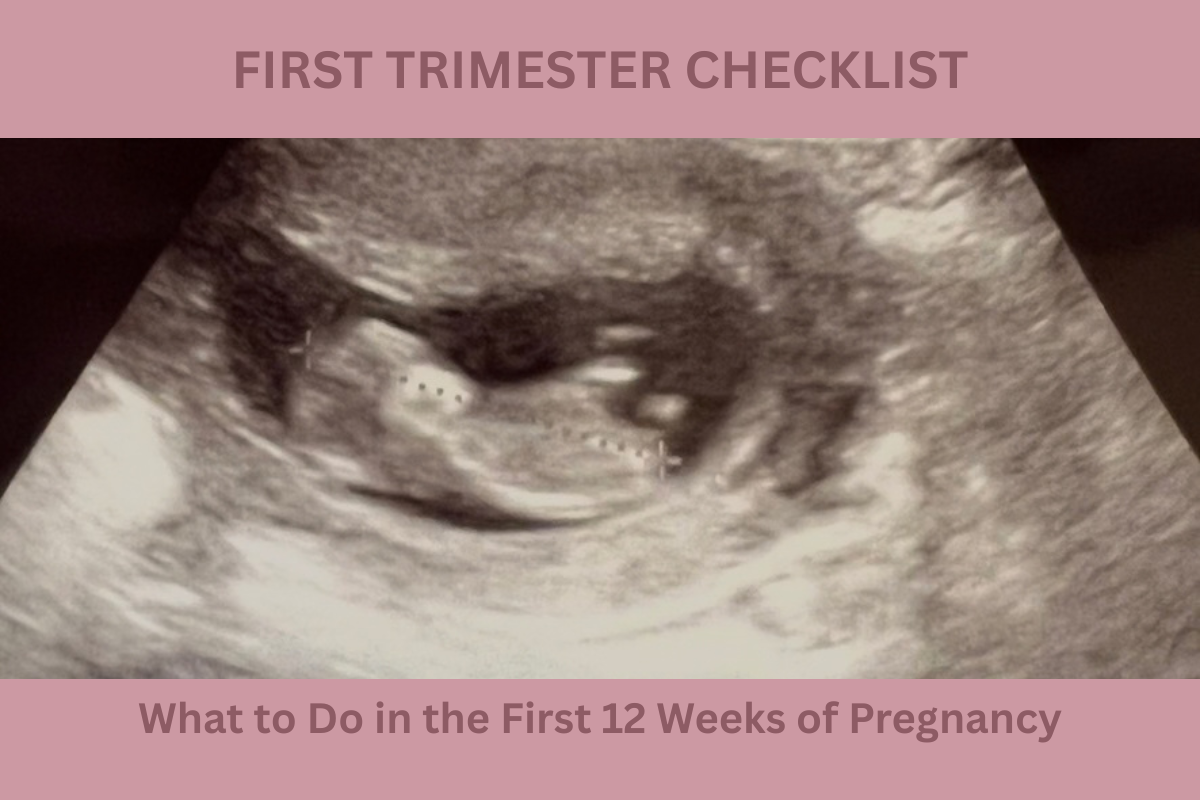
pic of my second baby at 11 weeks
If you’re newly pregnant and wondering what to do first, this first trimester checklist will walk you through the most important early pregnancy steps. Finding out you’re pregnant can feel exciting, overwhelming, and for some women, even frightening. These beginning moments are full of questions for many women, especially first-time moms. This is a time when so many parents start Googling everything from prenatal vitamins, to birth options, to early pregnancy symptoms — wondering what to expect and what to do now.
This first trimester checklist walks through the most common things to think about during the first trimester, plus a few gentle steps that can help you prepare for birth and postpartum early. You don’t have to do everything at once. Think of this as a simple roadmap for the first 12 weeks.
Confirm the Pregnancy & Schedule Prenatal Care
I remember searching so many things after getting that first positive pregnancy test and wondering, “What do I do after getting a positive pregnancy test?”
Like many people, the first thing that comes to mind is calling your doctor and setting up your first prenatal visit. This first visit is usually a pregnancy confirmation appointment, where you may get a vaginal ultrasound to see the baby, detect a heartbeat, and determine how far along you are based on measurements they take of the baby. They may also do blood work at this appointment.
This appointment is typically scheduled for when you are 8–12 weeks along, based on your last menstrual cycle — which can feel like such a long time! That’s practically your whole first trimester.
So what else can you do until then?
Once you’ve scheduled your confirmation appointment, now is the time to begin taking a good quality prenatal vitamin. Do your research on different options. I like the brand Needed for their studies on what you actually need in pregnancy. Another great quality brand that I used was Pink Stork.
I also took some additional supplements during my pregnancy to help support my body and my baby’s development. I took Vitamin C and D3, Beef Organs from Heart & Soil, and a magnesium supplement later in pregnancy for leg cramps. Talk with your doctor or midwife about your personal supplementation plan, and do your own research to decide what is best for you.
During the waiting period, you could also track any pregnancy symptoms you may have if you feel that’s helpful to share at your first appointment, or helpful for your own peace of mind. At that first appointment, you can also ask your doctor about any medications you’re taking and whether they are safe during pregnancy.
✔ Schedule your first prenatal appointment
✔ Choose your provider (OB, midwife, or family doctor)
✔ Start taking a prenatal vitamin
✔ Ask about any medications you're currently taking
✔ Begin tracking symptoms if helpful
Learn Your Birth Care Options Early
I would urge you early on to begin considering your choices for your prenatal care and your birth experience.
Decide what birth philosophy aligns with you. (You can take my Birth Approach Quiz to quickly get clear on what approach is most aligned with you.)
You can also start thinking about where you want to give birth and the differences between home, birth center, and hospital options.
You should begin researching local providers near you. You can choose between OB and midwife care, and this will also depend on where you decide you want to birth your baby.
I have a free PDF Comparison Guide all about these three decisions that can help lay out your options clearly so you can see the differences, and the pros and cons of each. You can also get my Provider Conversation Guide to help you interview your options, assess their answers, watch for any red flags, and determine who is most aligned with your values and needs.
This is also a great time to start learning about doulas if you don’t already know what they are and what they do. A doula can walk alongside you through this journey, guiding and supporting you while helping you prepare for your birth experience.
Interview a few to find one that you mesh well with. Starting to work with a doula early on is a great way to build that relationship and take advantage of all their knowledge and support.
You can check out myin-person doula packages or my virtual doula options if you want to begin seeing what support can look like. I’m also happy to jump on a free discovery callto answer questions about what working with a doula looks like.
✔ Research local providers
✔ Consider which birth setting aligns with your preferences
✔ Start learning what a doula does
✔ If planning to hire a doula, begin researching early
Start Learning About Pregnancy & Birth
Now I know something I was searching early on were things like “early pregnancy symptoms” and “what to expect in the first trimester,” and so much more.
I think it’s a great idea to learn more about what your body is experiencing and what to expect during this time. And it’s also so fun to learn how your baby is developing!
It’s also a good idea to start looking into the prenatal tests that you may be offered throughout your pregnancy and learn about them so you can decide whether or not you want to have them done. (You do have a choice.) I wrote all about prenatal tests, and you can check that out here.
You can also start writing down questions that come to mind so you remember to ask your care provider at your next appointment. I know I had questions often and always forgot them when the monthly appointment came around.
✔ Learn common first trimester symptoms
✔ Begin learning how labor works
✔ Understand your options for prenatal testing
✔ Start a list of questions for your provider
Begin Thinking About Nutrition & Rest
Nourishing your body in the first trimester is so important — and also so hard, especially if you are dealing with morning sickness or food aversions.
During this time, you can focus on comfort foods that feel good to you while adding in more nutritionally dense options when you can. A great book I love is Real Food for Pregnancy, which you can check out here:https://shop.lilynicholsrdn.com/
Remember to try to stay hydrated as well. Water is great, but electrolytes can also be really helpful for keeping you hydrated during pregnancy.
It’s important to give yourself grace here and allow yourself to rest when you need it. The first trimester is exhausting, and many moms report very low energy. It makes sense — your body is growing and developing a baby! Most of the physical development happens during the first trimester.
So listen to your body and rest when you need to. On the flip side, taking care of your body through regular movement or exercise can actually boost your energy levels and keep you feeling good. Give yourself grace, but know that movement can be really beneficial when you feel up to it.
I love the workout programs from NourishMoveLove. She has programs for each trimester, postpartum, and many other stages of life. You can see her program here: https://www.nourishmovelove.com/first-trimester-workout-plan/
If you are experiencing morning sickness, try to find strategies that help fight nausea earlier rather than later. It can last for several weeks, but that doesn’t mean you have to suffer.
I wrote a blog including many strategies that helped me survive morning sickness (because I had it bad), and I swear by some of these. You can check that out and get all my survival tips here.
✔ Focus on simple nourishing foods
✔ Stay hydrated
✔ Rest when your body needs it
✔ Find nausea strategies that help (small meals, ginger, etc.)
Start Early Birth Preparation (Gently)
You can start educating yourself and learning about birth and what to expect through labor and birth.
Start listening to birth stories and educational podcasts. Find coping techniques for contractions and learn generally what to expect when labor begins. You can also start deciding what childbirth education class you want to take.
You can follow birth educators and doulas to get evidence-based information and learn more about your options.
You can also begin thinking about the support you want in labor and building your birth team — your medical team, your partner, a doula, maybe your mom or a friend, or even a photographer or videographer.
Think about what kind of support would feel best for you during labor. How will you help your partner be prepared to support you? (A doula can help with this!)
✔ Begin learning how labor starts and progresses
✔ Start listening to birth stories or educational podcasts
✔ Follow birth educators or doulas for evidence-based information
✔ Begin thinking about the kind of support you want in labor
Begin Thinking About Postpartum (Most People Don’t)
Learn what postpartum actually looks like — you don’t want it to be a surprise.
Start thinking about what kind of support you might want after baby arrives so you can focus on resting and bonding with your baby. Who could help with meals, household tasks, or just making sure you’re taken care of?
I work with some of my clients to think about this and create a postpartum plan.
You can also check out what I wrote about preparing for postpartum and what I put in my postpartum carts.
✔ Learn what postpartum recovery actually looks like
✔ Start thinking about support after baby arrives
✔ Consider who can help during the early weeks
✔ Begin saving postpartum resources
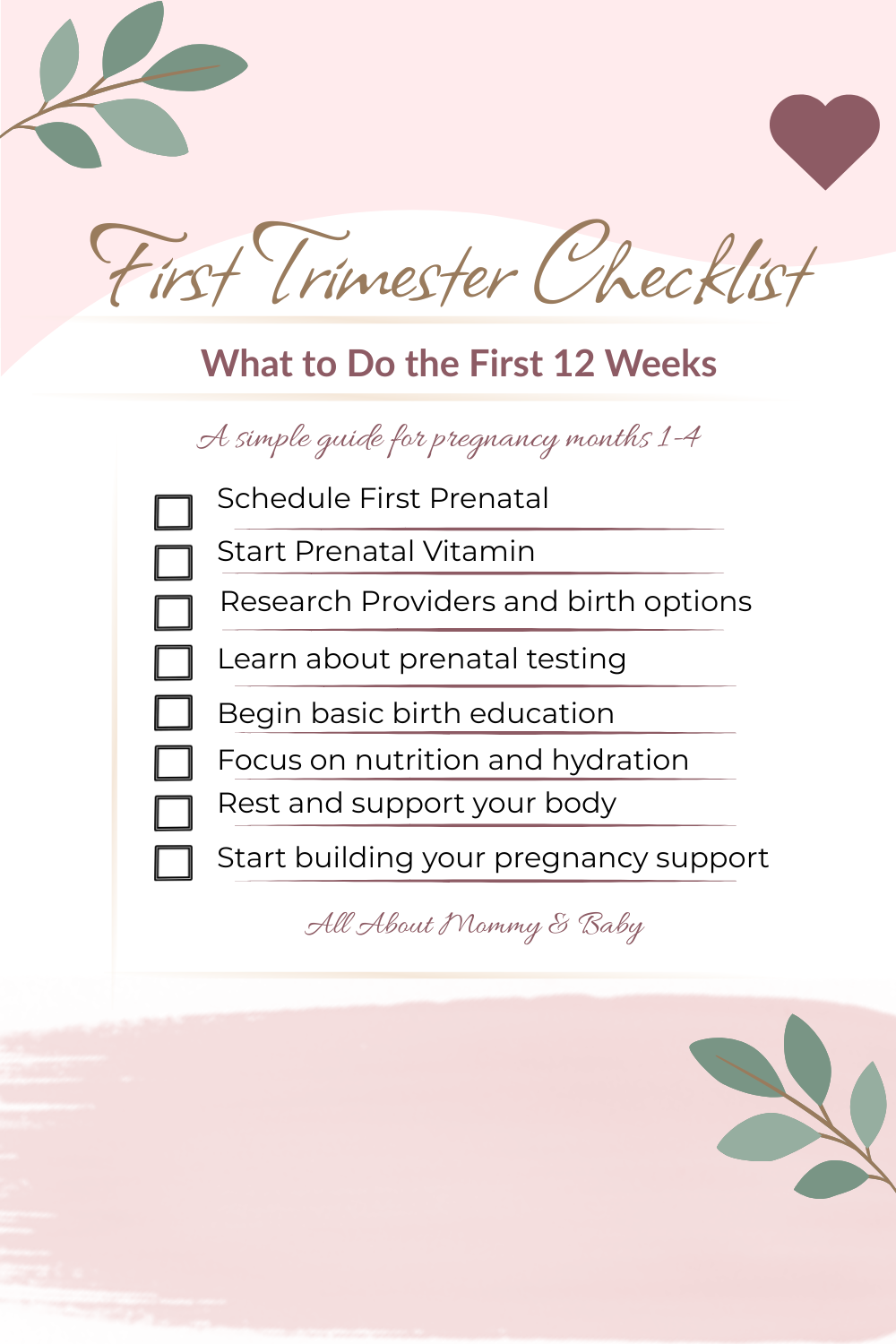
Simple First Trimester Checklist
✔ Schedule first prenatal appointment
✔ Start a prenatal vitamin
✔ Research providers and birth options
✔ Learn about prenatal testing
✔ Begin basic birth education
✔ Focus on nutrition and hydration
✔ Rest and support your body
✔ Begin thinking about postpartum support
✔ Start building your pregnancy support team
Wrapping Up
The first trimester is often about adjusting, learning, and taking things one step at a time.
You don’t have to have everything figured out yet. But starting to learn about your options early can help you feel more confident as your pregnancy continues.
If you enjoyed this First Trimester Checklist and feel you learned something, I’d love for you to sign up to receive emails when I publish something new. Next week I’ll be sharing the Second Trimester Checklist, and you won’t want to miss that!
Like I mentioned above, I offer in-person and virtual doula services. My virtual support can be strictly tailored to you and what you’re hoping to gain from doula support.
Set up a free discovery call, and let’s connect! 🤍
